
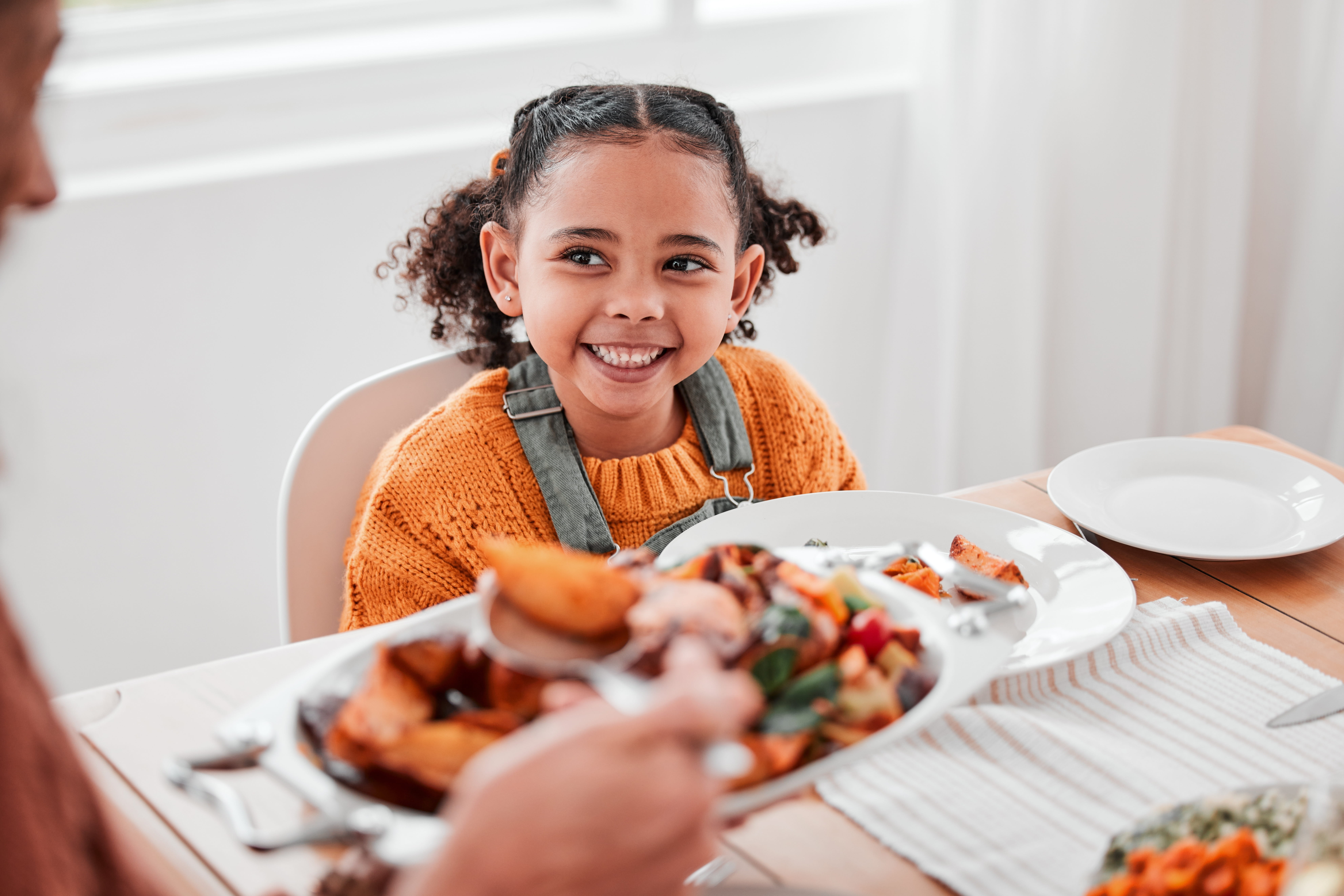

Why Your Child’s Relationship with Food Matters
Children are learning what food means long before they can explain it. Every comment, rule, or reaction around eating shapes their beliefs.
A healthy relationship with food helps kids:
- Trust their hunger and fullness cues
- Try new foods more willingly
- Feel less anxious at mealtimes
- Avoid extremes like chronic dieting or rigid food rules later in life
This is not about getting it perfect as a parent. It is about small shifts that protect their emotional and physical well-being.
Moving Away from “Good” & “Bad” Foods
Labeling foods as good or bad can make children feel like they are good or bad for eating them. Over time, this can create guilt, secrecy, or obsession with certain foods.
Instead, you can:
- Talk about foods in terms of what they do for our bodies.
- For example, foods that help us grow, give us energy, or help us stay full.
- Normalize “fun” foods
- Cookies, chips, and desserts can fit into a balanced pattern without being the enemy.
- Avoid using food as a moral scorecard
- Your child is not “being good” or “being bad” because of what is on their plate.
Letting Kids Listen to Their Hunger & Fullness
Children are born with natural cues for hunger and fullness, but comments like “ you need to finish everything on your plate” or “you do not need more, you already ate” can gradually override those natural signaling cues.
You can support their internal signals by:
- Offering regular meals and snacks
- Letting them decide how much to eat from what is offered
- Staying neutral if they eat a lot at one meal and less at another
This approach is often called a division of responsibility. Parents decide what, when, and where food is offered. Children decide whether and how much to eat from what is provided.
Avoiding Pressure at the Table
Pressuring children to eat more, try certain foods, or clean their plates can create resistance and stress. Even praise that focuses intensely on how much or what they ate can backfire.
Instead of pressure, try:
- Curiosity
- “What do you think of trying this new food?”
- Exposure without force
- Serving new foods alongside familiar ones, even if they have not yet eaten them
- Calm consistency
- Offering a variety of foods over time, without making a single meal feel like a test
The goal is to make mealtime safe and predictable, not a negotiation.
How to Talk About Bodies Around Children
Children notice how adults talk about their own bodies. If they frequently hear negative comments about weight, shape, or needing to change, they may start to feel the same way about themselves, especially when these comments are coming from a parent or another authoritative figure.
Helpful shifts include:
- Avoiding negative talk about your body or your child’s body
- Focusing on what bodies can do, not how they look
- Not tying worth or success to shrinking in size
- Being mindful about diet talk, weigh-ins, and “good” or “bad” days around food, as well as calling foods “good” and “bad”, because there are no good and bad foods!
You can still care about health and wellbeing, but the emphasis should be on habits and how your child feels, not appearance.
Reducing Mealtime Battles
If every meal feels like a fight, you are not alone. Common issues include picky eating, power struggles, and siblings comparing plates.
You can reduce tension by:
- Setting a basic routine – meals and snacks at roughly consistent times.
- Serving one or two safe foods with each meal – this is essential in reducing stress around meal times! So your child knows there is at least something they can eat.
- Keeping screens off and distractions minimal when possible
- Remembering that appetite and preferences change over time
Children often need many exposures, sometimes even up to 20, to a new food before they are comfortable trying it. Neutral repetition is more effective than pressure.
When to Seek Extra Support
It may be time to get professional help if you notice:
- Your child is losing weight or not growing as expected
- Extreme fear of certain foods or strong distress at meals
- Very limited variety that is not improving
- Frequent talk about needing to be thinner or feeling “fat”
- Signs of restriction, hiding food, or binge eating
You do not have to wait until things are severe. Early support can prevent problems from becoming more entrenched.
How One Nutrition Group Helps Families
At One Nutrition Group, we help families reduce mealtime battles and create a structure that supports both nutrition and emotional safety. We also help parents communicate about food and bodies in ways that protect long-term wellbeing, without making meals feel like a daily struggle.