

What Triglycerides Really Are
Triglycerides are a type of fat found in your blood. Your body uses them for energy, but when levels are high, it can increase overall cardiovascular risk, especially when paired with other factors like insulin resistance, pre-diabetes, and/or high LDL cholesterol.
Triglycerides are influenced by more than fat intake. They often rise when the body has more energy than it can use at once, especially from refined carbohydrates, sugar, and alcohol.
The Most Common Reasons Triglycerides Run High
For many people, triglycerides are a reflection of overall metabolic patterns. Some common drivers include:
- Frequent refined carbohydrate and added sugar intake
- Frequent or excessive alcohol intake
- Large evening meals or consistent late-night snacking
- Blood sugar swings and insulin resistance
- Low fiber intake
- Limited movement
- Genetics and family history
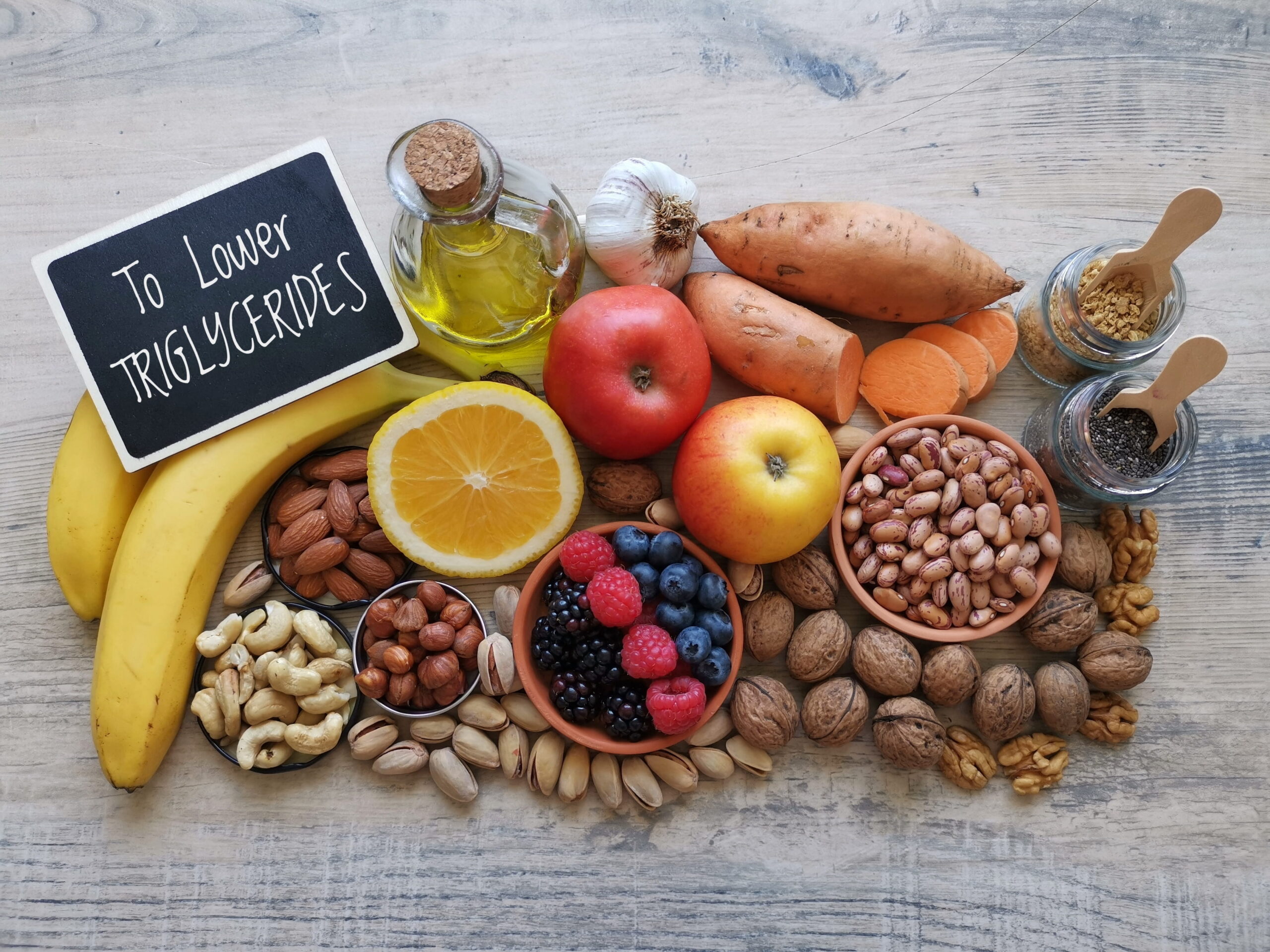
What to Eat More Often to Support Lower Triglycerides
The goal is not to eliminate everything you enjoy. It is to build a more stable foundation. Foods that commonly help to lower triglycerides include:
- Fiber-rich carbohydrates like oats, beans, lentils, berries, sweet potatoes (skin on), and whole grains
- Lean proteins like poultry, fish, tofu, eggs, cottage cheese and Greek yogurt
- Unsaturated fats like olive oil, avocado, nuts, and seeds
- Omega-3 rich foods like salmon, sardines, chia, flax, avocado and walnuts
- Non-starchy vegetables at lunch and dinner (also at snacks when possible!)
What to Limit Without Going Extreme
Most people see improvement when they reduce a few key triggers, not when they cut entire food groups. Foods to limit or reduce frequency include:
- Sugary drinks and sweetened coffee drinks
- Frequent desserts and packaged sweets
- Large portions of refined carbs like white bread, pastries, crackers, and salty chips
- Alcohol, especially several times per week
- Skipping meals and then overeating later on in the day
A Simple Meal Pattern That Often Improves Triglycerides
Many clients see benefits from three anchors: frequent meals and snacks, typically every 3-5 hours, focusing on protein and fiber, fewer long gaps without food, and less heavy eating late at night.
A basic plate structure that works well includes protein, non-starchy vegetables, a fiber-rich carbohydrate you enjoy, and a healthy fat source.
How One Nutrition Group Helps
Triglycerides are not just a “food list” problem. They are often caused by unbalanced dietary and lifestyle patterns. At One Nutrition Group, we look at your entire lifestyle, including blood sugar patterns, meal timing, stress, sleep, and other lifestyle factors.
We then build a plan that supports your labs and your real life so you can improve your numbers without relying on restrictive food rules.