

Common Signs of Low Iron
Low iron can look like many other issues, which is why it is often overlooked. Some common signs include:
- Fatigue that does not improve with increased rest
- Feeling cold easily
- Shortness of breath during normal levels of activity
- Lightheadedness
- Hair shedding
- Headaches
- Restless sleep
Why Iron Runs Low
Iron needs can increase, and intake or absorption can decrease. Common reasons include:
- Heavy menstrual bleeding
- Pregnancy and postpartum needs
- Low intake of iron-rich foods
- Low absorption due to digestive issues
- Frequent blood donation
- Endurance training
- Inflammation and chronic stress
The Two Types of Iron in Food
Heme iron comes from animal foods and is absorbed more easily. Non-heme iron comes from plant foods and can still be effective, but absorption depends more on what you pair it with.
Best Iron-Rich Foods
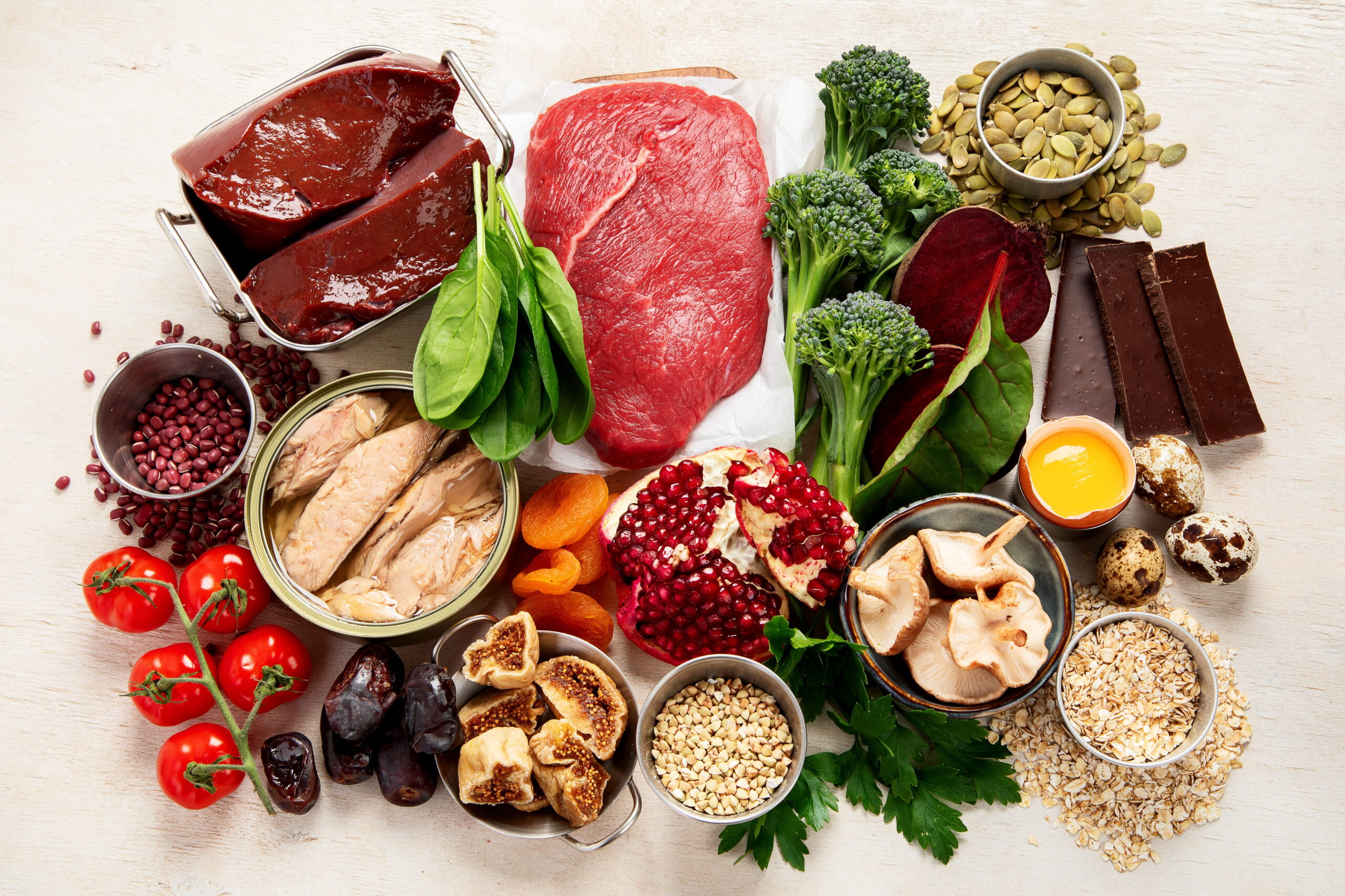
Heme iron sources include red meat in appropriate portions, dark meat poultry, and seafood. Non-heme iron sources include lentils and beans, tofu and tempeh, eggs, spinach and other greens, pumpkin seeds, and fortified cereals.
You do not need to eat all of these. A few consistent choices can go a long way.
How to Absorb More Iron
Iron absorption improves when you pair iron foods with vitamin C and avoid certain blockers near iron-rich meals.
- Pair beans with citrus or bell peppers and/or broccoli
- Add lemon juice to greens or lentil dishes
- Include berries or fruit with meals
- Space coffee and tea at least an hour to two hours away from iron-rich meals when possible
When to Ask for Labs
If fatigue is persistent or symptoms are strong, it is worth discussing labs with your provider. Lab markers often include hemoglobin and hematocrit, ferritin, transferrin, iron, and iron saturation.
Ferritin is especially important because it reflects iron stores. Some people have normal hemoglobin but low ferritin and still feel exhausted.
How We Help at One Nutrition Group
We help clients identify whether low iron may be part of their fatigue picture and build food-based strategies that fit their preferences. If supplements are needed, we help coordinate timing, food pairing, and habits that support absorption.
Fatigue is not always something you should have to push through. Sometimes your body is asking for a very specific type of support.